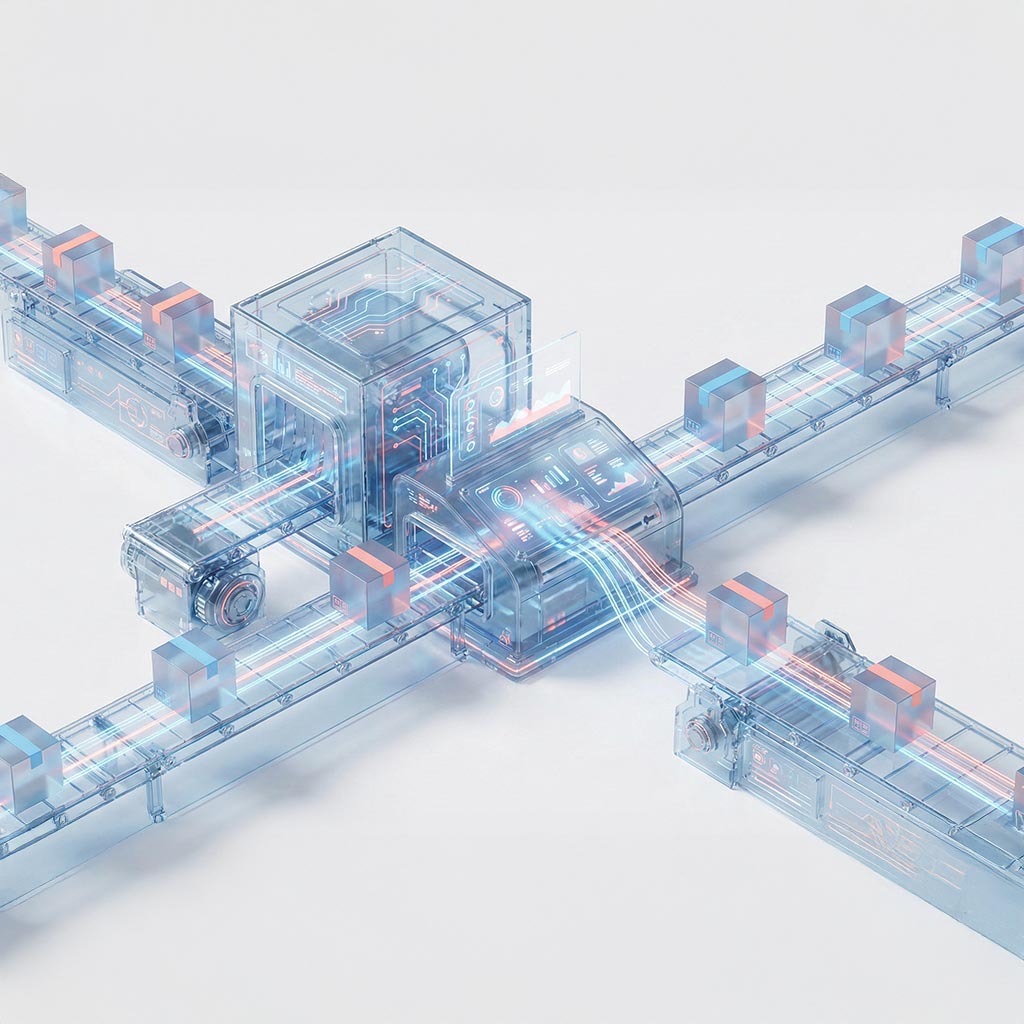
Your homepage isn't just a digital welcome mat; it is your 24/7 salesperson. But if you are treating it like a static billboard, you are leaving money on the table. Homepage merchandising is the strategic arrangement of products, banners, and content designed to guide visitors from "just looking" to "add to cart" in seconds.
For Shopify store owners, the homepage is the most expensive real estate you own. It receives the bulk of your traffic, yet often suffers from the highest bounce rates because merchants simply forget to update it. Relying on manual merchandising—constantly dragging and dropping products to keep the "New Arrivals" block fresh—is a nightmare. It is time-consuming, prone to human error, and inefficient. This guide explains how to stop the manual grind and use an automated, rule-based approach to turn your homepage into a constantly optimized, high-converting sales engine.
What is homepage merchandising?
Homepage merchandising is the strategic arrangement of products, collections, visual elements (like banners), and calls to action (CTAs) on a website's main page to guide users toward a purchase.
To execute this effectively, store owners rely on three core strategies:
- Feature Key Collections: Highlight specific subsets like "Best Sellers" and "New Arrivals" to capture attention immediately.
- Use High-Impact Visuals: Deploy promotional banners and integrate shoppable media to create a visual path to purchase.
- Leverage Automation: Use tools to keep content fresh and personalize the experience for individual users without manual work.
How homepage merchandising drives business growth
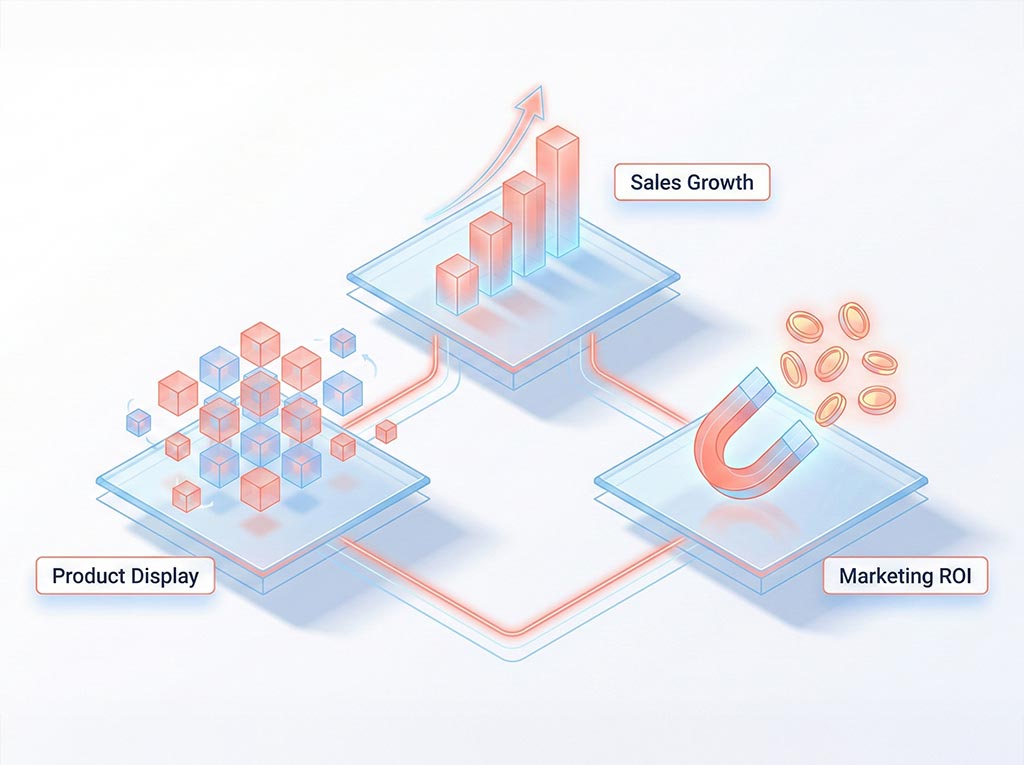
Merchandising is not merely an aesthetic exercise; it is a core driver of business growth that directly impacts your bottom line. By shifting from a static design to a dynamic strategy, you optimize three critical areas of your e-commerce operation.
First, it revolutionizes product display. Instead of relying on a flat catalog listing where random items appear at the top, intelligent merchandising ensures the most relevant, high-performing products are featured prominently. This strategic ranking ensures that visitors see items they are actually likely to buy, rather than old inventory that happens to be first in the alphabet.
Second, it actively influences sales. By deploying persuasive elements like high-impact promotional banners and clear Calls to Action (CTAs), you guide visitors through a curated shopping journey. This tailored approach reduces friction, directly correlating with a lower bounce rate and increased Average Order Value (AOV) as customers are encouraged to add matching items to their carts.
Finally, effective merchandising boosts your marketing ROI. Your homepage acts as the ultimate landing page for traffic driven by paid ads and email campaigns. By creating a highly effective funnel that immediately engages visitors, you ensure that your ad spend isn't wasted on a "bounce," turning paid traffic into tangible revenue.
Core strategies for dynamic homepage merchandising
Creating a dynamic homepage requires more than just good design; it demands a tactical approach where multiple strategies work in unison. The goal is to move away from a static display and build a responsive environment that adapts to your business needs.
This begins with strategically featuring key collections. Instead of a generic grid, deploy specific blocks like a "Best Sellers" grid to build social proof, or a "New Arrivals" block to keep returning visitors engaged. You can also spotlight seasonal bundles to drive urgency. Visuals play a crucial role here. High-quality hero banners must be used to anchor these collections, creating a cohesive visual story. Crucially, these elements should not be static. By leveraging automation, you can ensure this content remains fresh without you having to manually swap out images at midnight.
Strategic placement of promotional banners
Promotional banners are your primary visual tool for communicating special offers, new collections, and flash sales. For maximum impact, these must be placed in high-visibility areas where they cannot be missed, typically as a hero banner "above the fold" or interspersed alongside relevant product carousels.
To convert effectively, a banner needs more than just a pretty image; it requires a clear visual hierarchy. This means pairing compelling headlines with a distinct Call-to-Action (CTA) button that tells the user exactly what to do next. Furthermore, these assets should be managed by automation tools that update them based on real-time data. This ensures your homepage always reflects current promotions—like a flash sale countdown—automatically.
Integration of shoppable media
Shoppable media refers to interactive content—such as lifestyle images or videos—that allows a consumer to purchase a product directly from the media itself. This technology effectively collapses the sales funnel, creating a direct path from the moment of inspiration to the transaction.
Integrating this on the homepage significantly enhances your merchandising strategy by making the experience immersive rather than purely transactional. Instead of forcing a user to hunt for an item they see in a lifestyle shot, they can simply click a tag to view the product details. This leverages visual discovery to eliminate friction, creating a seamless transition from casual "browsing" to active "buying."
3 Rules You Can Automate Today
The future of merchandising isn't about working harder; it's about letting algorithms do the heavy lifting. Instead of manually curating every block, you can set up simple logic rules that keep your homepage fresh automatically. Here are three essential rules you should implement immediately to upgrade your digital merchandising strategy.
- The "Freshness" Rule (New Arrivals): Never manually update your "New In" section again. Set a rule to automatically pull in any product created in the last 30 days that has an image and stock > 0. This ensures returning visitors always see something new, increasing engagement without you lifting a finger.
- The "Social Proof" Rule (Best Sellers): Don't guess what's popular. Use a rule to populate a collection with products that have sold more than X units in the last week or have a review rating above 4.5 stars. This leverages real customer data to push high-converting items to the top of your product collections.
- The "Inventory Awareness" Rule (Hide Out-of-Stock): Nothing kills a sale faster than clicking a product on the homepage only to find it's sold out. Automate a rule to immediately hide or demote products on the homepage when their inventory hits zero, replacing them with similar in-stock items to keep the sales flowing.

How to power your dynamic homepage with Rapid Search
Rapid Search is an all-in-one growth engine designed specifically for Shopify merchants who want to stop merchandising by hand. It provides the essential tools to automate and supercharge your storefront, allowing you to move beyond static displays and time-consuming manual updates. By implementing advanced merchandising rules and features powered by AI, you can ensure your homepage always shows the right products without constant oversight.
This platform is built to do the heavy lifting for you. Instead of relying on guesswork, it transforms the homepage from a simple landing page into a dynamic, data-driven merchandising tool that automatically adapts to your business needs and customer behavior.
Leverage AI and automation for hands-free merchandising
Rapid Search allows store owners to leverage automation through powerful merchandising rules, effectively replacing the need for time-consuming manual work. For example, you can create dynamic collections that automatically populate based on logic rather than manual drag-and-drop.
You might set a rule to generate a "Top Rated" block that only includes items with a 4.5-star rating or higher. Similarly, a "New Arrivals" grid can automatically feature all inventory added in the last 30 days using real-time data. This "set it and forget it" approach drastically improves operational efficiency, ensuring your homepage content is always fresh and relevant.
Create personalized collections and smart recommendations
Beyond simple automation, Rapid Search uses behavioral data to deliver powerful personalization. It goes deeper than standard lists by generating smart collections and personalized recommendations tailored specifically to each individual user based on their unique browsing and purchase history.
By automatically spotlighting the products and categories most relevant to each visitor, these features significantly increase user engagement. This level of adaptive personalization ensures that your homepage feels curated for everyone who visits, directly improving conversion rates and fostering long-term customer loyalty.
Conclusion
Homepage merchandising is no longer about static window dressing; it is a high-stakes strategy that dictates the success of your Shopify store. By mastering the arrangement of hero banners, product tiles, and promotional content, you transform your homepage into an active sales engine. Moving from manual selection to AI-powered automation—using tools like Rapid Search—unlocks the true potential of your digital real estate. It ensures every visitor encounters a personalized, data-driven experience that not only captures attention but drives sustainable business growth.
.jpg)